Cirrhosis

Cirrhosis and complications

Sarcopenia in Cirrhosis: Why Malnutrition Is the Complication Nobody Screens For

A patient walks into clinic weighing the same as they did a year ago. Their BMI is normal, sometimes even comfortably so. On paper, nothing looks alarming. Then a hand-grip test or a mid-arm muscle circumference measurement tells a different story: significant muscle loss, masked entirely by fluid retention or by fat mass that has quietly replaced lean tissue. This is sarcopenia in cirrhosis, and it is present in roughly a third to two-thirds of patients with advanced liver disease depending on the population studied and the method used to detect it — far more common than clinicians who rely on weight and BMI alone will ever suspect. It matters because sarcopenia is not a cosmetic finding. It independently predicts mortality, predicts post-transplant complications, predicts longer ICU stays, and predicts a harder recovery from every decompensating event — ascites, hepatic encephalopathy, infection — that a cirrhotic liver will eventually produce. A patient who loses muscle loses physiological reserve, and reserve is exactly what determines who survives a septic episode or tolerates a transplant operation and who does not. Why Cirrhosis Causes Muscle Loss The liver in cirrhosis fails at several jobs that protect muscle. Glycogen storage capacity drops, so the body shifts to breaking down muscle protein for gluconeogenesis far earlier than it should — an overnight fast in a cirrhotic patient behaves metabolically like several days of starvation in someone with a healthy liver. Ammonia handling is impaired, and elevated ammonia directly interferes with muscle protein synthesis at the cellular level. Anorexia from early satiety — often driven by ascites compressing the stomach — reduces intake at precisely the moment demand is rising. Chronic low-grade inflammation adds a further catabolic push. The result is a patient who is losing muscle whether or not their weight on the scale suggests it. Why It Gets Missed BMI is the wrong tool here, and using it as a screening filter is the single biggest reason sarcopenia goes undiagnosed. Fluid retention — ascites, peripheral oedema — adds weight exactly as muscle is being lost, so a scale or a BMI calculation can show a stable or even rising number in a patient who is becoming progressively more sarcopenic underneath. A patient can be sarcopenic at any BMI, including overweight and obese — sarcopenic obesity is a recognised and particularly under-recognised phenotype in MASLD-related cirrhosis, where excess fat mass conceals substantial muscle depletion. Screening: What Actually Works Formal screening does not require expensive equipment. In routine practice: Mid-arm muscle circumference or triceps skinfold — simple, bedside, reasonably validated in cirrhosis. Hand-grip strength — fast, cheap, and correlates well with functional muscle mass and with clinical outcomes; a practical first-line screen in any liver clinic. CT-based skeletal muscle index at the L3 vertebral level — the closest thing to a gold standard, and often already available from imaging done for other reasons (HCC surveillance, transplant work-up) — worth re-examining rather than ordering a fresh scan. Bioelectrical impedance analysis — useful but its accuracy is reduced by ascites and fluid shifts, so interpret with caution in decompensated patients. The practical point: any patient with cirrhosis being evaluated for transplant, or with two or more decompensating events, should have some form of objective muscle assessment — not a visual impression, and not BMI. Protein Targets — and the Persistent Myth of Protein Restriction The most damaging piece of outdated advice still circulating among patients and, occasionally, among clinicians is that protein should be restricted in liver disease to prevent hepatic encephalopathy. This is wrong, and has been wrong for years. Protein restriction accelerates sarcopenia without meaningfully reducing encephalopathy risk, and current recommendations are unambiguous: patients with cirrhosis need more protein than the general population, not less. The working target is 1.2–1.5 g/kg body weight per day, higher again — up to 1.5–2.0 g/kg/day — in patients who are acutely unwell, malnourished, or peri-transplant. Even in a patient with a history of hepatic encephalopathy, the correct response to an episode is to identify and treat the precipitant — infection, GI bleed, constipation, a missed lactulose dose — not to cut protein. Practical measures that make a real difference: A late-evening snack containing 50–80 g of carbohydrate — shortens the overnight catabolic fasting window that cirrhotic metabolism handles so poorly. Distributing protein across the day in smaller, frequent meals rather than one large dose — improves tolerance and utilisation. Branched-chain amino acid (BCAA) supplementation — particularly useful where standard dietary protein alone is poorly tolerated, or in patients with more advanced disease. Vegetable and dairy protein sources tend to be better tolerated than red meat in some patients and are a reasonable first adjustment if symptoms suggest intolerance — not a reason to reduce total protein intake. Building It Back: Exercise and Rehabilitation Nutrition alone does not reverse sarcopenia — resistance exercise is the other half of the equation, and it is safe in compensated and most decompensated cirrhosis when supervised appropriately. Even modest, structured resistance training improves muscle mass and functional capacity in cirrhotic patients, including those awaiting transplant. Deconditioning from inactivity — often driven by fatigue or a well-meaning but mistaken instinct to “rest” — compounds the metabolic drivers of muscle loss. Where feasible, referral for structured physiotherapy or a rehabilitation programme before transplant listing is worth building into routine care rather than treating as optional. Why This Belongs in Every Pre-Transplant Work-Up Sarcopenia assessment is not an academic add-on to transplant evaluation — it changes management. A sarcopenic patient with an otherwise borderline MELD score may benefit from a structured pre-habilitation window before listing. Post-transplant, baseline muscle mass predicts ICU length of stay, ventilator time, and infection risk. Patients and families are often focused entirely on the liver itself; explaining that muscle mass is being tracked as carefully as liver function tests tends to reframe nutrition and physical activity from an afterthought into something they take seriously. The Bottom Line Malnutrition and sarcopenia affect the majority of patients with advanced cirrhosis, are systematically under-detected because

Sarcopenia in Cirrhosis: Why Malnutrition Is the Complication Nobody Screens For Read More »

Liver Cirrhosis Specialist in Mumbai — Treatment, Complications & Transplant

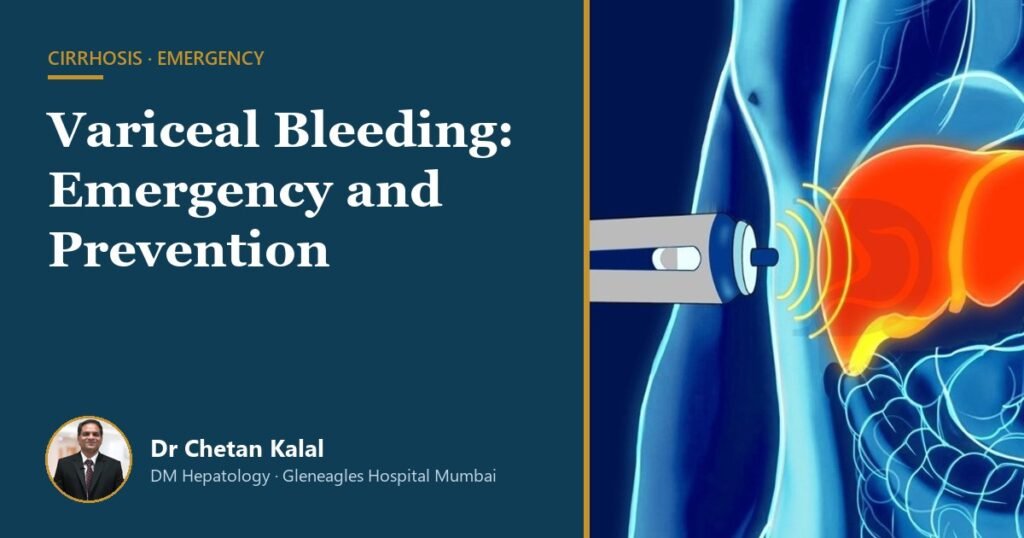
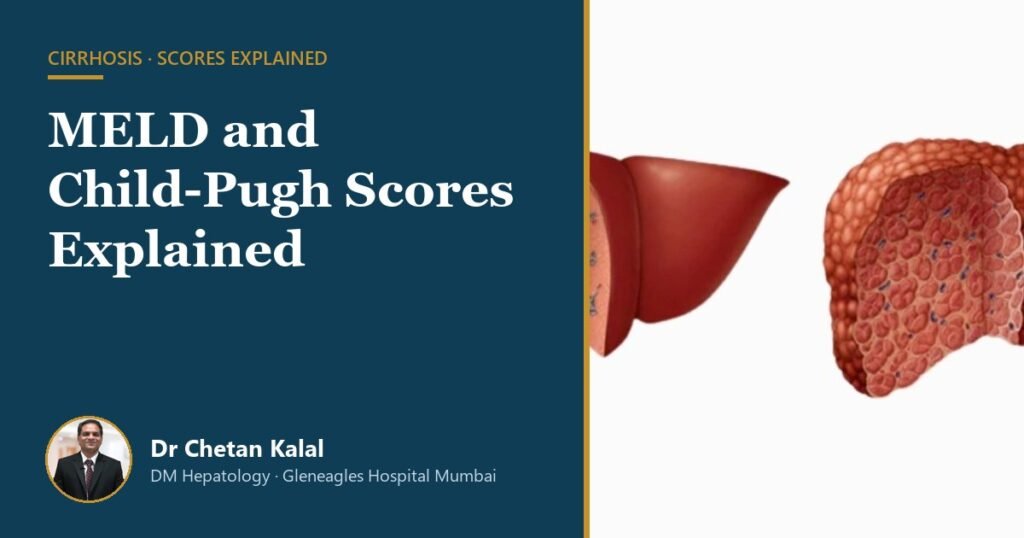
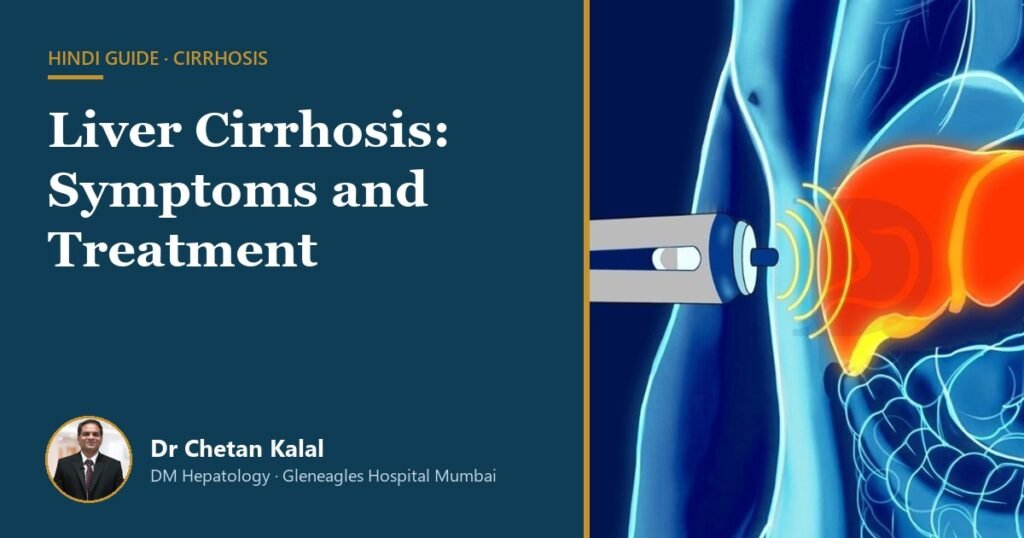
Liver cirrhosis is the end stage of chronic liver inflammation and fibrosis. Once cirrhosis is established, the liver architecture is permanently altered — but with the right management, disease progression can be halted, complications prevented, and survival significantly extended. In decompensated cirrhosis, specialist hepatology input determines whether a patient recovers to a compensated state or deteriorates toward liver failure. This article explains cirrhosis, its causes in India, how it is graded, and what specialist treatment in Mumbai involves. What is liver cirrhosis? Cirrhosis is diffuse hepatic fibrosis with nodule formation — the liver’s normal architecture replaced by scar tissue. It is the final common pathway of chronic liver injury regardless of cause. The liver loses its regenerative capacity and its ability to perform key functions: protein synthesis (albumin, clotting factors), detoxification, bile production, and glucose regulation. Compensated cirrhosis: The liver maintains adequate function. Patients may be asymptomatic or mildly symptomatic. Without treatment of the underlying cause, progression to decompensation is inevitable — at a rate of approximately 5–10% per year. Decompensated cirrhosis: The liver can no longer maintain function. Defined by the appearance of: ascites (fluid in abdomen), variceal bleeding (from oesophageal or gastric varices), hepatic encephalopathy (confusion, altered consciousness), or jaundice with coagulopathy. Each decompensation event carries significant mortality and marks a transition point where liver transplant evaluation should begin. Causes of cirrhosis in India Alcohol-related liver disease (ALD) — the leading cause in urban India; cirrhosis develops after 10–15 years of heavy drinking in susceptible individuals Hepatitis B (HBV) — India has an intermediate endemicity of ~3.5%; HBV-related cirrhosis is common, particularly in men over 40 Hepatitis C (HCV) — less prevalent than HBV but increasing; now curable with direct-acting antivirals (DAAs) MASLD/NASH — metabolic-associated steatotic liver disease; the fastest-growing cause of cirrhosis in India, driven by obesity, type 2 diabetes, and metabolic syndrome Autoimmune hepatitis (AIH) — more common in women; treatable with immunosuppression if caught early Wilson’s disease — hereditary copper overload; causes cirrhosis in young patients if untreated Cryptogenic cirrhosis — no identifiable cause after complete workup; often represents burned-out NASH or undetected autoimmune disease Grading cirrhosis — Child-Pugh and MELD Child-Pugh score (A/B/C) assesses five parameters: bilirubin, albumin, INR, ascites, and encephalopathy. Child-Pugh A = compensated; Child-Pugh C = severely decompensated, 1-year survival without transplant approximately 35–45%. MELD score (Model for End-Stage Liver Disease) uses bilirubin, creatinine, and INR to estimate 90-day mortality. MELD ≥15 is the threshold at which liver transplant is considered to offer survival benefit. MELD 3.0 (the updated version incorporating sodium and sex) is now standard in transplant listing. These scores guide treatment intensity and transplant listing decisions — they should be calculated and interpreted by a trained hepatologist, not just generated by an online calculator. Complications of cirrhosis — specialist management Ascites First-line: sodium restriction and diuretics (spironolactone ± furosemide). Refractory ascites (not responding to diuretics): large-volume paracentesis with albumin infusion, TIPS evaluation, or transplant listing. Spontaneous bacterial peritonitis (SBP) — a life-threatening infection of ascitic fluid — requires prompt diagnosis by paracentesis and empirical antibiotics. Secondary prophylaxis with norfloxacin is mandatory after a first SBP episode. Variceal bleeding Medical: terlipressin or somatostatin analogues plus early endoscopy (within 12 hours). Endoscopic: band ligation for oesophageal varices. Secondary prophylaxis: non-selective beta-blockers (propranolol or carvedilol) plus repeated band ligation. TIPS for refractory or early re-bleeding. Failure of TIPS = transplant indication. Hepatic encephalopathy Precipitant identification and treatment (infection, bleeding, electrolyte disturbance, constipation). Lactulose titrated to 2–3 soft stools per day. Rifaximin for recurrent or persistent encephalopathy. Zinc supplementation. Nutritional support — adequate protein (1.2–1.5 g/kg/day) is essential; protein restriction is harmful and outdated. Hepatorenal syndrome (HRS) HRS-AKI: terlipressin + albumin is the treatment of choice (EASL 2018; AASLD). Early diagnosis critical — serum creatinine rise in a cirrhotic patient requires prompt assessment for HRS vs. pre-renal vs. intrinsic renal disease. HRS-CKD: renal function may not recover; transplant is the definitive treatment. Cirrhosis and liver transplant — when to refer Liver transplant evaluation should be initiated — not deferred — when: MELD ≥15 or Child-Pugh C First episode of SBP (indicates significantly impaired immunity and prognosis) Refractory ascites requiring frequent paracentesis Recurrent variceal bleeding despite secondary prophylaxis Hepatic encephalopathy requiring hospitalisation HCC within Milan criteria (transplant is curative in selected patients) In India, LDLT is the dominant modality. A family member or spouse can donate a lobe of their liver. The hepatologist’s role is to evaluate the recipient’s candidacy, assess the donor, and manage the patient through the transplant process and beyond. Dr. Chetan Kalal provides complete cirrhosis management at Gleneagles Hospital Mumbai — from diagnosis and cause identification through complication management, MELD-based transplant listing, LDLT evaluation, and post-transplant long-term care. Virtual consultations are available for patients from any Indian city or internationally. Frequently Asked Questions Can liver cirrhosis be reversed? Early-stage fibrosis (F1–F2) can regress with treatment of the underlying cause. Established cirrhosis (F4) does not reverse — but disease progression can be arrested, and with effective treatment of the cause (antiviral therapy for HBV/HCV, alcohol abstinence for ALD, weight loss for MASLD), patients can remain in compensated cirrhosis indefinitely. Decompensated cirrhosis requires specialist management and often transplant evaluation. Who is the best cirrhosis specialist in Mumbai? Dr. Chetan Kalal — DM (Hepatology), MD (Medicine), MRCP (UK), Associate Director Hepatology at Gleneagles Hospital Mumbai — manages the complete spectrum of cirrhosis from diagnosis through transplantation. He is the first DM Hepatologist of Maharashtra with 26+ PubMed publications and APASL-AARC consortium membership. What is the life expectancy with liver cirrhosis? Compensated cirrhosis: median survival >12 years with cause-specific treatment. Decompensated cirrhosis: median survival without transplant 1.8–3 years after first decompensation, depending on MELD score. Child-Pugh C without transplant: 1-year survival ~35–45%. These figures are averages — individual prognosis depends on cause, MELD score, complication control, and access to subspecialty care. Is liver transplant the only treatment for cirrhosis? No. Most cirrhosis patients do not need transplant. Treatment of the underlying cause, prevention of complications, and management of decompensation episodes can maintain

Liver Cirrhosis Specialist in Mumbai — Treatment, Complications & Transplant Read More »

Book AppointmentDr. Chetan Kalal · Hepatologist