
FibroScan in Mumbai
Understanding FibroScan
FibroScan is a non-invasive test used to assess the condition of the liver by measuring liver stiffness and, in appropriate cases, the amount of fat in the liver. Unlike a conventional liver biopsy, it does not require a needle or removal of liver tissue.
Liver stiffness can increase when fibrosis develops, making FibroScan useful in assessing the risk and stage of chronic liver disease. It is commonly used in conditions such as fatty liver disease, hepatitis B, hepatitis C and cirrhosis. However, the result needs to be interpreted alongside medical history, blood tests and other investigations because liver stiffness can also be affected by factors other than fibrosis.
For patients seeking FibroScan in Mumbai, Dr. Chetan Kalal provides specialist hepatology evaluation to determine when FibroScan is appropriate and how its findings should be interpreted in the context of overall liver health.
Dr. Chetan Kalal: Expertise in FibroScan-Based Liver Assessment
Dr. Chetan Kalal is a DM Hepatologist with 15+ years of experience in evaluating and managing complex liver conditions, including fatty liver disease, viral hepatitis, cirrhosis and advanced liver disorders. Recognised as Maharashtra’s first DM Hepatologist, he trained in Hepatology at ILBS, New Delhi, under Prof. S. K. Sarin. His experience helps place FibroScan findings in the context of the underlying liver disease and determine the appropriate next step.
15+ Years of Experience
Extensive experience assessing chronic and complex liver disorders.
First DM Hepatologist in Maharashtra
Advanced specialist training in hepatology from ILBS, New Delhi.
Fibrosis Assessment Expertise
Experience evaluating liver stiffness and progression of liver disease.
26 Peer-Reviewed Publications
Academic contributions across national and international medical journals.
Your FibroScan Evaluation Starts With Understanding What the Liver Stiffness Means
FibroScan does not simply provide a number that can be interpreted in isolation. The result needs to be considered alongside the cause of liver disease, blood tests, imaging and other clinical findings. The assessment focuses on:


FibroScan in Mumbai: Measuring Liver Stiffness Without a Biopsy
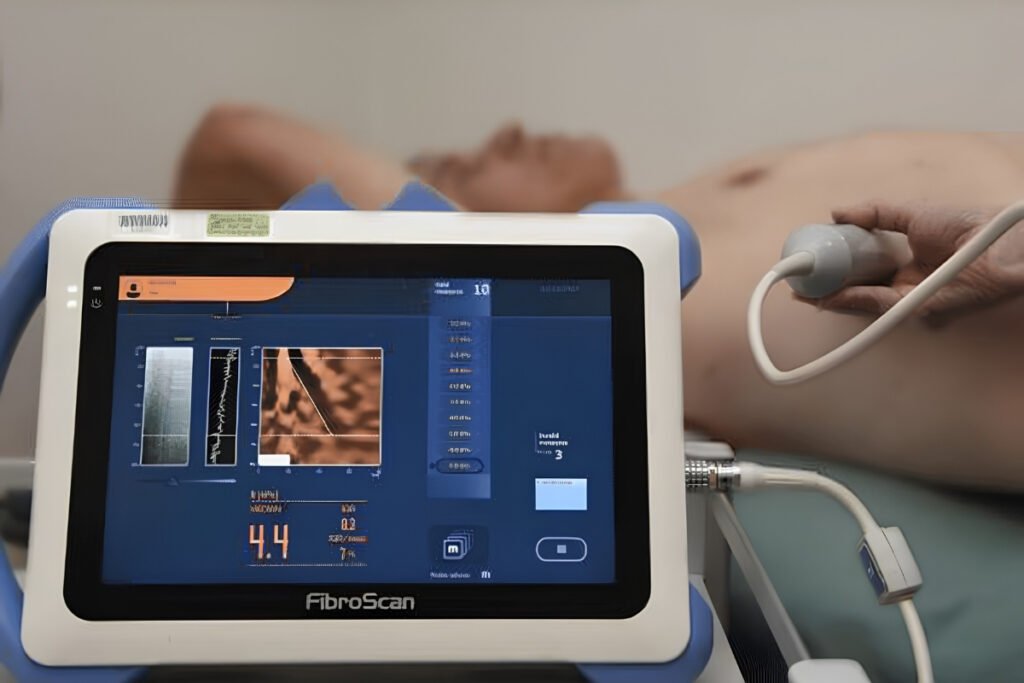
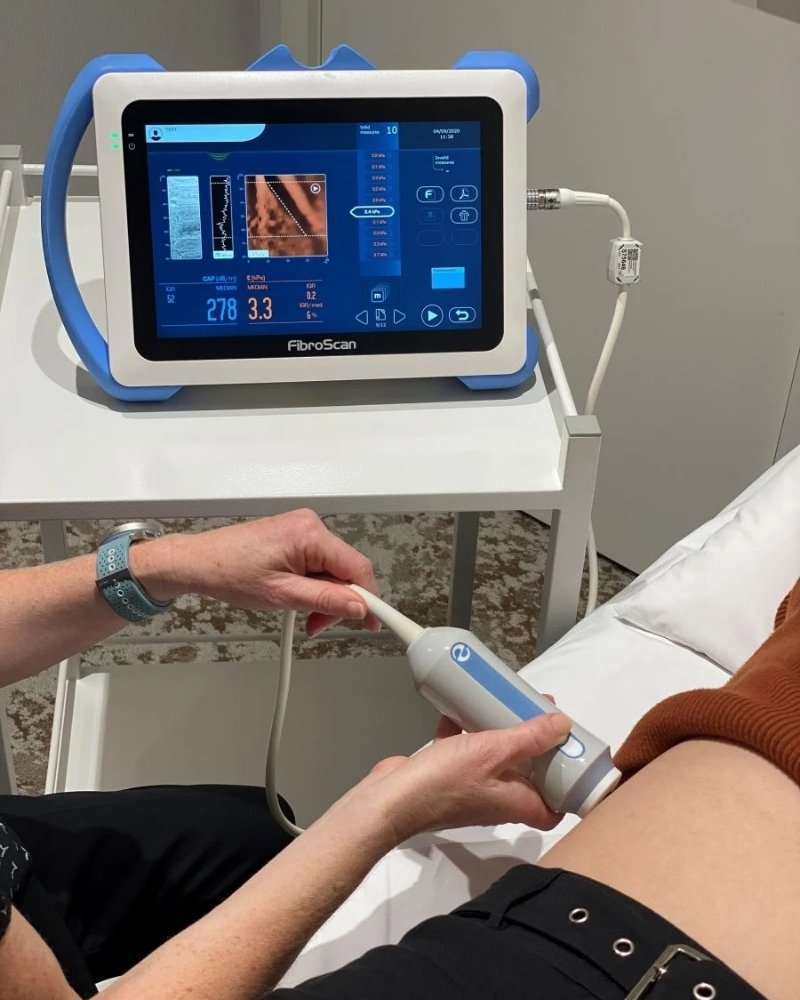
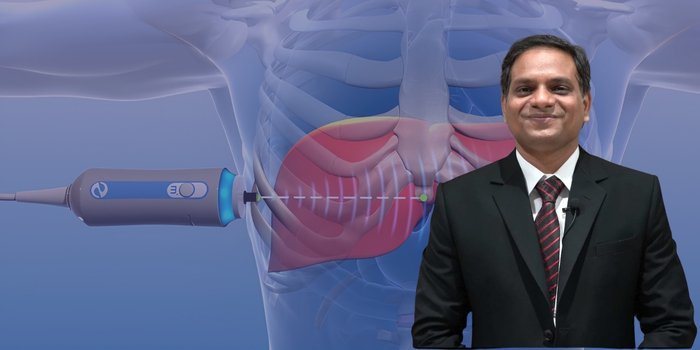
FibroScan uses a probe placed over the liver to send controlled vibrations through the tissue. The device measures how quickly the resulting wave travels through the liver, producing a liver stiffness measurement.
Liver Stiffness Measurement
The result provides an estimate of liver stiffness, which can help assess the likelihood and severity of fibrosis.
Controlled Attenuation Parameter
In appropriate FibroScan systems, this measurement can help estimate the amount of fat present in the liver.
Non-Invasive Assessment
The test does not require a needle, tissue removal or surgical procedure.
Repeat Monitoring
Because FibroScan is non-invasive, it can be repeated when clinically appropriate to monitor changes in liver stiffness over time.
What Can FibroScan Help Determine?
FibroScan can provide useful information about liver stiffness and fat accumulation, particularly in patients being evaluated for chronic liver disease.
When Should You Consider a FibroScan?
FibroScan may be useful when there is a need to assess liver fibrosis or monitor chronic liver disease without immediately proceeding to an invasive procedure. It may be recommended when there is:
- Fatty Liver on Imaging - A FibroScan may help determine whether liver fat is accompanied by significant fibrosis.
- Chronic Hepatitis - Patients with hepatitis B or C may require fibrosis assessment to understand the extent of liver damage.
- Abnormal Liver Tests - Persistent liver test abnormalities may require further assessment of liver stiffness and underlying disease.
- Suspected Fibrosis - FibroScan can provide non-invasive information when liver scarring is suspected based on clinical or laboratory findings.
- Known Cirrhosis - Selected patients with established chronic liver disease may undergo FibroScan as part of ongoing assessment.
A FibroScan result is most useful when it forms part of a broader clinical assessment. Management depends on the underlying condition and the degree of liver damage suggested by the overall findings.
The stiffness value is considered alongside the underlying liver disease, blood tests and other investigations rather than being interpreted in isolation.
When appropriate, the fat measurement can provide additional information in patients with suspected or established fatty liver disease.
Liver enzymes, platelet counts and other laboratory findings can provide important context when interpreting FibroScan results.
Changes in liver stiffness over time may provide useful information when monitoring selected patients with chronic liver disease.
If FibroScan results are unclear or inconsistent with the clinical picture, additional imaging, blood tests or occasionally liver biopsy may be considered.
The findings can help determine the appropriate frequency of follow-up and whether the patient requires monitoring for complications of advanced liver disease.
What Happens During a FibroScan?
FibroScan is a relatively simple examination and does not involve tissue removal. Preparation and testing instructions may vary depending on the clinical setting.

Before the Test
The patient may be advised to follow specific fasting instructions before the examination.

During the Test
The patient lies down while a probe is placed against the skin over the liver.

During Measurement
The device sends controlled vibrations through the liver and records the resulting measurements.

After the Test
There is generally no recovery period, allowing patients to return to routine activities unless other medical instructions apply.

Frequently Asked Questions About FibroScan
Is FibroScan the same as a liver biopsy?
No. FibroScan is a non-invasive test that estimates liver stiffness and, when applicable, liver fat. A biopsy involves removing a small sample of liver tissue for microscopic examination.
Is FibroScan painful?
No. FibroScan is generally painless and does not involve needles or an incision. Patients usually feel small vibrations from the probe placed against the skin.
Can FibroScan detect fatty liver?
FibroScan can provide an estimate of liver fat using an appropriate fat measurement such as the Controlled Attenuation Parameter. The result should be interpreted along with other clinical findings.
How often should FibroScan be done?
There is no single schedule for everyone. The frequency depends on the underlying liver disease, degree of fibrosis and the reason for monitoring. A hepatologist can determine when repeat assessment is useful.
Can FibroScan detect cirrhosis?
FibroScan can provide information about liver stiffness that may support the assessment of advanced fibrosis or cirrhosis. However, the result should be interpreted together with clinical, laboratory and imaging findings.
Can FibroScan results improve?
Liver stiffness can change when the underlying liver condition improves, but the meaning of a change depends on its cause. FibroScan results should therefore be compared with other clinical and laboratory findings over time.
If you have fatty liver, hepatitis, abnormal liver tests or known liver disease, consult a hepatologist to understand whether FibroScan can help assess your liver health.