
ACLF (Acute-on-Chronic Liver Failure): Specialist Care in Mumbai and International Second Opinion

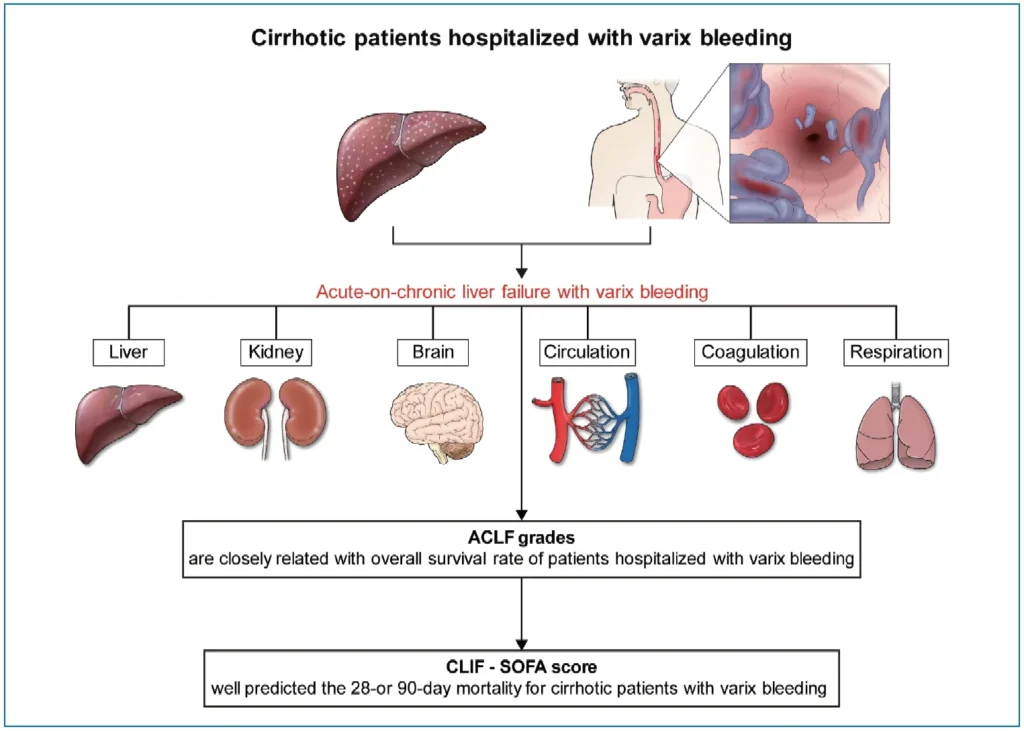
Acute-on-chronic liver failure (ACLF) is a distinct, rapidly evolving syndrome that sits at the most critical intersection of hepatology and intensive care. It strikes patients with pre-existing chronic liver disease — cirrhosis or significant fibrosis — who develop an acute precipitating event (infection, alcohol, reactivation of hepatitis, GI bleeding) that triggers organ failures and carries a 28-day mortality of 30–90% depending on the grade. In my practice at Gleneagles Hospital, Mumbai, ACLF patients occupy our liver ICU and demand the most intensive medical management we can deliver. I have published extensively on ACLF through the APASL AARC Research Consortium and co-authored the APASL AARC consensus guidelines — the defining document for ACLF management in Asia.

For families of patients with ACLF — particularly those abroad, or those at hospitals without specialist liver units — this article explains what ACLF is, how it is graded, what treatment can and cannot achieve, and how to obtain a specialist second opinion rapidly when minutes matter.

What Is ACLF? The APASL AARC Definition

The Asian Pacific Association for the Study of the Liver (APASL) AARC (ACLF Research Consortium) defines ACLF as:

“An acute hepatic insult manifesting as jaundice and coagulopathy, complicated within 4 weeks by clinical ascites and/or encephalopathy in a patient with previously diagnosed or undiagnosed chronic liver disease and is associated with high 28-day mortality.”

APASL AARC 2023 Kyoto Consensus

This differs from the European CLIF-C definition, which requires extrahepatic organ failures. The APASL definition is more inclusive and better captures the Asian patient population, where hepatitis B reactivation and alcohol remain dominant precipitants.

AARC Grading: How Severe Is Your Patient’s ACLF?

The AARC score (incorporating bilirubin, INR, creatinine, lactate, hepatic encephalopathy grade, SIRS criteria) stratifies ACLF into three grades with sharply differing prognoses:

AARC GradeScore28-day MortalityManagement Goal
Grade 15–7~14%Treat precipitant, aggressive nutrition, prevent deterioration
Grade 28–10~41%Active organ support, consider therapeutic plasma exchange, early transplant listing
Grade 311–15~68%Intensive organ support, urgent transplant evaluation — time-critical

A patient’s AARC grade on admission is the single most powerful predictor of outcome. Grade 3 ACLF without transplantation carries near-universal mortality beyond 28 days. Every hour of delay in appropriate treatment worsens the score.

Common Precipitants of ACLF in India and Asia

  • Alcohol-related hepatitis — the dominant precipitant in Maharashtra and across India; triggers a devastating inflammatory cascade on a background of cirrhosis
  • Hepatitis B reactivation — spontaneous or treatment-related; a preventable cause when antivirals are prescribed before immunosuppression
  • Bacterial infections — spontaneous bacterial peritonitis, pneumonia, UTI — any infection in a cirrhotic can tip the balance to ACLF
  • Drug-induced liver injury (DILI/HILI) — anti-tuberculosis drugs, Ayurvedic/herbal preparations (including Tinospora cordifolia/Giloy), paracetamol
  • GI bleeding — variceal or non-variceal; the ammonia load and haemodynamic stress precipitate organ failures
  • Superimposed viral hepatitis — hepatitis E in pregnancy, HAV on chronic HBV

Treatment of ACLF: What the Evidence Supports

Treat the Precipitant First

The single most impactful intervention in ACLF is identifying and reversing the precipitating event. Antibiotics for SBP. Antivirals (tenofovir, entecavir) for HBV reactivation. Stopping the offending drug in DILI. Banding or vasoactive drugs for variceal bleeding. Treating the precipitant gives the liver the best chance to recover spontaneously.

Nutritional Support — Not Optional

Protein restriction is harmful in ACLF. Protein requirements are 1.2–1.5 g/kg/day. Enteral nutrition is preferred over parenteral whenever the gut is accessible. My research — including a randomised controlled trial published in the Indian Journal of Gastroenterology (2022) — demonstrated that aggressive long-term nutrition therapy significantly improves survival in alcohol-related cirrhosis. The principle is even more critical in ACLF: a catabolic, malnourished patient cannot mount the regenerative response needed to survive.

Therapeutic Plasma Exchange (TPE)

High-volume therapeutic plasma exchange — replacing 8–12 units of plasma over 3 sessions — reduces circulating inflammatory mediators, restores coagulation factors, and has been shown in a propensity-matched study from the AARC cohort (Maiwall et al., Liver International 2021, co-authored by Dr. Kalal) to improve systemic inflammation and survival in ACLF. TPE is not a universal therapy — patient selection matters — but it is a powerful bridge to transplantation or spontaneous recovery in Grade 2–3 ACLF when offered at a specialist centre.

Liver Transplantation for ACLF

ACLF that does not improve — defined as failure to drop below Grade 2 within 7 days of optimal medical management — is a primary indication for emergency liver transplantation. Transplantation in Grade 2 ACLF patients achieves 1-year survival of 80–85%; in Grade 3, outcomes are more variable but transplantation remains the only curative option. The key barrier is time — ACLF patients deteriorate rapidly and transplant evaluation must begin immediately, not after a week of watching and hoping.

Getting a Second Opinion on ACLF: How It Works

When a family member has ACLF, the situation feels overwhelming — unclear prognosis, conflicting advice, and a system moving at its own pace while the patient deteriorates. A specialist second opinion does not mean abandoning the treating team. It means accessing disease-specific expertise to confirm the diagnosis, grade the severity accurately, and identify any treatment gap — especially regarding TPE or transplant eligibility — that the current centre may not have the infrastructure to offer.

I provide rapid remote second opinions for ACLF patients in 48 hours or less. What I need:

  • Recent blood tests: bilirubin, INR, creatinine, sodium, lactate, albumin, CBC, LFT panel
  • Ultrasound abdomen with Doppler (last 4 weeks)
  • History: underlying liver disease, precipitating event, course over last 7 days
  • Current medications and ICU observations if available
  • Treating doctor’s notes or discharge summary

I calculate the AARC score, assess transplant eligibility, review whether TPE is indicated, and provide a written clinical opinion with specific recommendations within 48 hours. For Grade 3 ACLF where transplantation is advised, I can simultaneously begin the pre-transplant workup remotely so that no time is lost if the patient travels to Mumbai. Contact via the international patients page.

ACLF FAQ: Questions Families Ask

Can a patient with ACLF Grade 3 survive without a transplant?

Rarely without transplantation. Grade 3 ACLF carries a 28-day mortality of approximately 68% with optimal medical therapy alone. If the precipitant is fully reversible (e.g., drug-induced, HBV reactivation with antiviral treatment) and organ failure is limited, spontaneous recovery occurs in a minority. For most Grade 3 ACLF patients, transplantation is the only path to survival. Delay costs lives — listing should not wait for the patient to be “stable enough”, because stabilisation requires the transplant.

What is the difference between ACLF and acute liver failure (ALF)?

ALF occurs in a previously healthy liver — a previously normal person who develops acute liver dysfunction, coagulopathy, and encephalopathy within days to weeks. ACLF occurs on a background of pre-existing chronic liver disease or cirrhosis — the acute event tips a diseased system into failure. Both are life-threatening emergencies, but their aetiologies, treatment, and transplant criteria differ substantially.

How quickly does ACLF progress?

Rapidly. AARC score can worsen within 24–48 hours. A patient who is Grade 1 on Monday can be Grade 3 by Thursday if the precipitant is not controlled or if a new complication — infection, GI bleed — supervenes. This is why daily AARC scoring and daily clinical reassessment are mandatory, and why decisions about TPE and transplant listing must be made early, not after waiting to see how things evolve.

Is ACLF treated differently in India vs the UK or USA?

The APASL AARC criteria are the Asian standard; the CLIF-C ACLF criteria are used in Europe. Both define the syndrome but with slightly different boundaries. Treatment principles are universal: treat precipitant, support organs, consider TPE, transplant if not improving. The key practical difference is that India’s specialist ACLF hepatologists — particularly those trained at ILBS, where the AARC database was developed — have concentrated experience managing this specific syndrome that Western centres with lower case volumes cannot match.


Dr. Chetan Kalal is Associate Director of Hepatology and Liver Transplant at Gleneagles Hospital, Mumbai. He is a co-author of the APASL AARC ACLF Consensus Guidelines (Hepatology International 2019, 2023) and has published over 26 peer-reviewed papers. ORCID: 0000-0002-5284-7890. For ACLF second opinion, contact via the international patients page.

About the Author

Dr. Chetan Kalal — MBBS, MD (Internal Medicine), DM Hepatology (ILBS, New Delhi) — is the First DM Hepatologist of Maharashtra and Associate Director, Hepatology & Liver Transplant, at Gleneagles Hospital Mumbai. He has 26 peer-reviewed publications and serves on the APASL AARC Expert Panel. Fellow, National Academy of Medical Sciences (FNAMS). Learn more · Book appointment

Leave a Comment

Your email address will not be published. Required fields are marked *